

How to use chia seeds in a nutshell: start by soaking them. Mix one tablespoon of chia seeds with a quarter cup of water or milk. Or a full cup if you’re making a drink. Let it sit for 10 to 15 minutes so the seeds turn into a gel. Then you can eat it. Drink it. You can also stir them into things that are already wet like yogurt, oatmeal or a smoothie. Begin with a small amount, then increase to one or two tablespoons per day. Always drink plenty of water while using chia seeds. The important thing to remember is never to eat them dry. Especially not a spoonful followed by a glass of water.
Chia seeds have been around for a long time as the food everyone says you should eat. You usually see a bag of them near the oats in the grocery store with claims about omega-3s or digestion. There’s always a post online promising a flat stomach in just a week. Most of that is oversold. What people don’t know is that eating chia seeds dry and washing them down with water has caused throat blockages that needed an endoscope to fix.
It’s rare. It’s completely avoidable. That’s why this guide starts with soaking chia seeds before anything. Then we’ll cover chia water, chia pudding, how much to eat each day and what science says about weight loss, constipation, blood sugar and skin.
Quick Takeaways
- Soak chia seeds before eating. Never eat them dry.
- A good starting ratio is one tablespoon of chia seeds to a quarter cup of liquid.
- One to two tablespoons a day is enough for healthy adults.
- Chia can help with feeling full and with constipation. It won’t melt belly fat.
- Take it slow and drink water. The fiber needs room to move.
What Are Chia Seeds and Why Do People Eat Them?
Chia seeds come from Salvia hispanica, a plant that grows in Mexico and Guatemala. People there have eaten chia seeds for centuries according to Kayla Kopp, a dietitian at the Cleveland Clinic. So this isn’t a wellness trend.
Nutritionally, an ounce of chia seeds. About 28 grams. Has 138 calories, around 10 grams of fiber, 5 grams of protein and a good amount of plant-based omega-3 fat called ALA. The fiber is what most people care about.
What makes chia seeds special is what happens when they meet water. The fiber soaks up liquid. The seeds turn into a slippery gel, kind of like tiny tapioca pearls. That works well for pudding. It can be a problem if the gel forms in your throat.
The One Safety Rule: Don’t Eat Chia Seeds Dry
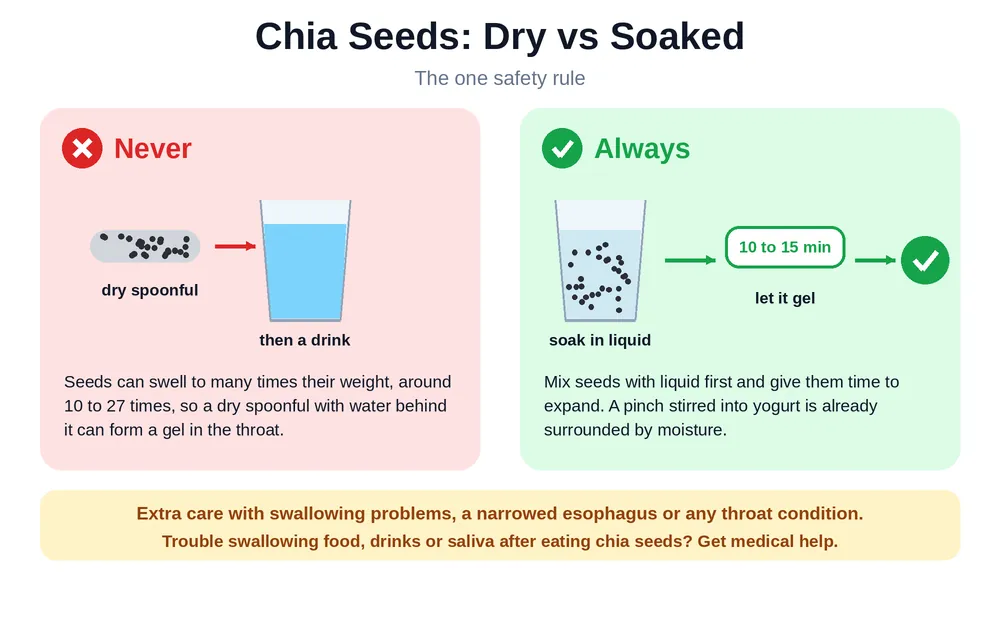
In 2014, a case report described a 39-year-old man who ate about a tablespoon of dry chia seeds and then drank a glass of water. The seeds swelled in his esophagus and blocked it. He couldn’t swallow anything, not even his own saliva, and doctors had to use an endoscope to clear the blockage. He did have a history of swallowing trouble, and the case was later published in a medical journal.
The study’s author, Rebecca Rawl, MD, said it appeared to be the first case of its kind. She was also clear that chia seeds are safe when they’re mixed with liquid first and given time to expand. How much liquid they can absorb depends on the source you read, anywhere from about 10 to 27 times their own weight.
So the rule is short:
- Soak first. Let the seeds turn to gel before they go anywhere near your throat.
- Be extra careful if you’ve had swallowing problems, a narrowed esophagus or any throat condition.
- Get medical help if swallowing food, drinks or saliva becomes difficult after eating chia seeds.
A pinch stirred into yogurt is fine, because the seeds are already surrounded by moisture. The risky version is the dry spoonful with a drink behind it.
How To Use Chia Seeds: The Correct Way, Step by Step
One basic method covers nearly everything.
- Measure out 1 tablespoon of seeds.
- Add liquid. Water, milk, plant milk or juice all work. Use about ¼ cup for a gel, or a full cup for a drink.
- Stir right away. Chia clumps quickly, and the seeds tend to sink and stick together, so keep stirring through the first minute.
- Wait 10 to 15 minutes, giving it a stir once or twice in between.
- Check the texture. You want a loose gel with no hard, dry centers.
- Use it. Drink it, spoon it, or fold it into food.
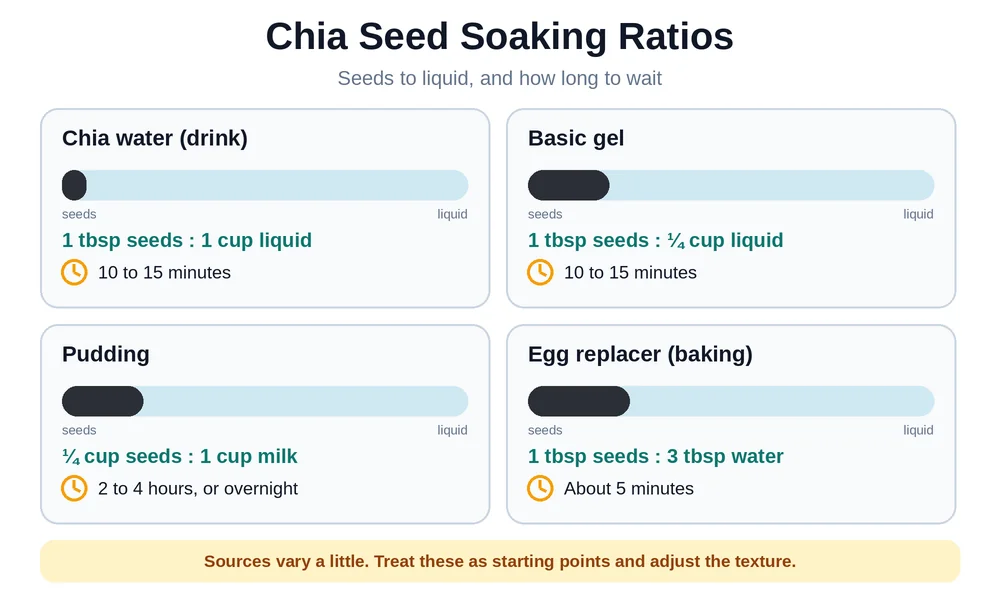
Ratios at a Glance
| Use | Seeds : liquid | Wait |
| Chia water (drink) | 1 tablespoon to 1 cup | 10 to 15 minutes |
| Basic gel | 1 tablespoon to ¼ cup | 10 to 15 minutes |
| Pudding | ¼ cup to 1 cup | 2 to 4 hours, or overnight in the fridge |
| Egg replacer (baking) | 1 tablespoon seeds (or 2 teaspoons ground) to 3 tablespoons water | About 5 minutes |
Sources disagree a little on exact ratios, so treat these as starting points and adjust until the texture suits you.
How Many Chia Seeds Should You Eat Per Day?
There is no official recommended dose for chia seeds because chia seeds are a food, not a supplement. Dietitians at places such as Harvard’s Nutrition Source and Mayo Clinic generally suggest about 1 to 2 tablespoons a day, which is roughly 15 to 28 grams, as a reasonable amount of chia seeds for a healthy adult.
If you are new to chia seeds, start with a small amount. A teaspoon or a tablespoon a day for the first week or two, then increase gradually over a few weeks. Drink more water than usual. Fiber needs fluid to move through the gut and jumping straight to a large dose often leads to bloating and people blame the chia seeds.
How To Make Chia Seed Water (and Drink It Every Day)
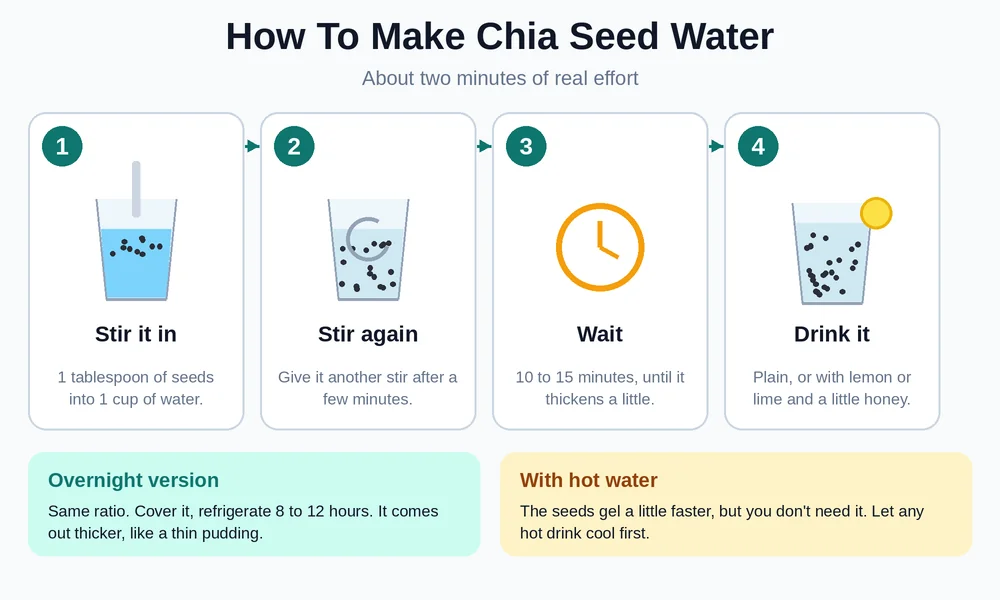
Chia seed water is the easiest way to begin and it takes about two minutes of real effort.
- Stir one tablespoon of chia seeds into one cup of water.
- Stir again after a minute.
- Leave it for ten to fifteen minutes until it thickens a little.
- Drink it plain. Add lemon or lime and a little honey for a chia fresca.
Chia seeds overnight in water use the same ratio. Cover, refrigerate for eight to twelve hours and it will come out thicker, closer to a pudding. A jar with a lid makes this easy.
With hot water the chia seeds can gel a little faster, but you don’t need it. Let any hot drink cool before you drink it.
Every day? For healthy adults a small daily serving of chia seeds is fine. Keep it moderate. Drink extra water. If you have a digestive condition or swallowing issues check with a doctor first.
Best Ways To Use Chia Seeds in Daily Life
Chia seeds have a slightly nutty taste and they disappear into almost any wet food. Stirred into yogurt chia seeds need a splash of water or milk and ten to fifteen minutes to thicken. In a smoothie chia seeds thicken the drink as it blends. Oatmeal and overnight oats are easy because chia seeds soak up the liquid while it sits in the fridge. Soaked chia seeds can stand in for an egg in baking. A spoonful will vanish into a soup, sauce or stir-fry as long as there is plenty of liquid around. Pudding, of course, which comes next.
The rule hasn’t changed. Chia seeds go into moisture first, then they sit for a few minutes.
Easy Chia Pudding Recipe
A reliable starting point is one quarter cup of chia seeds to one cup of milk, which makes about two servings.
- Stir one quarter cup of chia seeds into one cup of milk, dairy or plant-based.
- Add a little vanilla and sweetener if you like.
- Stir again after five minutes, then once more after ten minutes. Skip this. You will find a clump at the bottom later.
- Refrigerate for two to four hours or overnight.
- Top with fruit or nuts. Serve.
Prefer it thinner? Use three tablespoons of chia seeds per cup of milk. The texture takes some getting used to. Many people find it better with fruit and something crunchy on top.
Chia Seeds for Weight Loss and Belly Fat: What the Evidence Says
This is the claim that gets the most searches, and the research does not back it up very well.
The theory makes sense. Chia seeds’ fiber and gel can make you feel fuller so you might eat less.
When researchers have tested chia seeds the results are mixed. Cleveland Clinic describes a study of seventy-six people with overweight or obesity who took chia seeds or a placebo twice a day for twelve weeks. The two groups showed no difference in weight, cholesterol, blood pressure or inflammation.
An older 2009 study of ninety people taking fifty grams a day for twelve weeks found the same.
So chia seeds can be a part of a diet but they will not do the work on their own.
Two related questions come up often:
- Belly fat. There is nothing like spot reduction. Your body decides where fat comes off and no seed, drink or food can target your stomach.
- Weight loss in seven days. No seed does this. A fast drop on the scale is mostly water. It comes back.
What about weight gain? Chia seeds are calorie-dense, at one hundred thirty-eight calories an ounce so they can add calories and healthy fat to a smoothie or pudding if you are trying to gain weight.
It is a boost, not a plan.
Chia Seeds for Constipation
This is one of Chia’s more believable uses. The seeds contain both soluble fiber (the gel) and insoluble fiber, and Cleveland Clinic’s dietitian says chia can likely help relieve constipation.
The catch is fluid. If you eat a lot of chia without drinking enough, the seeds absorb water from your gut, which can cause constipation, bloating and gas, the exact opposite of what you wanted. Soak the seeds, start small, drink plenty of water, and back off if it makes things worse. And if constipation is a regular problem, our guide on how to use a bidet covers a gentler way to clean up.
Chia Seeds and Insulin Resistance or Blood Sugar
Chia’s gel slows digestion, and that may blunt the blood sugar spike after a meal. Healthline mentions older studies from 2010 and 2013 in which bread made with chia led to smaller post-meal rises in healthy adults, though it also says more human research is needed.
That’s early, modest evidence. Chia isn’t a treatment for insulin resistance or diabetes, and anyone managing blood sugar, especially with medication, should tell their care team before making it a daily habit.
Chia Seeds for Skin and Face
There are two ways people use chia seeds for the skin: eating them and putting them on the face. The truth is, the proof isn’t as strong as the marketing makes it seem.
Eating chia seeds.
Chia seeds have omega-3 fats and antioxidants. Dermatologists often say these nutrients are good for skin health. There’s not a lot of solid evidence that eating chia seeds actually changes your skin. So think of chia as one food among many, not a magic cure.
Putting chia seeds on your face.
Some people make DIY face masks using soaked chia gel mixed with aloe, honey or yogurt. They leave it on for 15 minutes. Many say it feels hydrating. There’s no strong research to back this up. If you want to try it, do a patch test first. Keep it away from your eyes. Don’t use it on irritated skin. If your skin stings or itches, wash it off right away.
Best Time To Eat Chia Seeds (and on an Empty Stomach)
There’s no science saying one time is better than another. The best time is when you’ll actually eat them and feel safe doing so.
Many people eat chia in the morning, stirred into yogurt or oats, because it helps them stay full longer. Chia water on an empty stomach can work fine for some. For others, a sudden burst of fiber with nothing else in the stomach can cause bloating or discomfort. If that happens to you just eat chia with a meal instead.
Side Effects and Who Should Be Careful
Most side effects happen when you eat too much, too fast, or without enough water.
- Digestive trouble: bloating, gas, constipation or diarrhea can happen.
- Choking risk: dry chia seeds can be dangerous if swallowed without water. So always soak them first.
- Allergies: this is rare. Healthline has reported cases in people with allergies to sesame, hazelnuts or peanuts.
- Medications: chia’s nutrients may interact with blood thinners, blood pressure medicines and diabetes drugs. Always check with your doctor or pharmacist.
- Conditions: if you have IBS or inflammatory bowel disease extra fiber might make symptoms worse.
Medical note: This guide gives information only. It’s not medical advice. Anyone with swallowing problems, digestive conditions, allergies or regular medications should talk to a doctor before making chia seeds part of their routine.
What Not To Mix With Chia Seeds
There’s no official “never mix” list. A few combinations are worth avoiding, though.
- Dry seeds with a chaser of water, which is the scenario from the case report.
- Dry seeds on dry foods, such as sprinkled over crackers.
- Large amounts with very little fluid.
- Anything on a medication list you haven’t checked with a doctor.
Chia is fine with milk, yogurt, juice, oats and fruit. Just give it time to soak.
Frequently Asked Questions
What’s the correct way to eat chia seeds?
Soak them first. Stir 1 tablespoon into ¼ cup of liquid, wait 10 to 15 minutes until it gels, then eat it or stir it into food. Don’t eat dry seeds.
How do you drink chia seeds in water?
Stir 1 tablespoon of seeds into a cup of water and stir again after a few minutes. Let it sit for 10 to 15 minutes. Then drink it with lemon or lime if you like.
Can you drink chia seeds in water every day?
For healthy adults a small daily serving is fine. Keep it moderate, drink plenty of water and check with a doctor if you have swallowing or digestive problems.
What are good ways to use chia seeds?
Yogurt, smoothies, oatmeal and pudding are the easy ones. Soaked chia also works as an egg replacer in baking. It also mixes into soups and sauces. Anywhere that’s wet will do.
What is the best time to eat chia seeds?
There’s no best time. Morning in yogurt or oats works well for many people. If chia water on an empty stomach doesn’t sit well, have it with a meal.
Do chia seeds reduce belly fat?
No. Chia can help you feel full. Your body doesn’t burn fat from one spot and studies on chia and weight loss are mixed.
What are the side effects of chia seeds?
Bloating, gas, constipation or diarrhea if you eat too much or drink too little. Dry seeds can cause choking. Allergies and medication interactions are possible but less common.
How do I make chia seed water?
Stir 1 tablespoon of chia seeds into 1 cup of water, stir again after a few minutes and leave it for 10 to 15 minutes. For a thicker version, refrigerate it overnight.
What not to mix with chia seeds?
Don’t swallow dry seeds and chase them with water, and don’t eat large amounts with little fluid. If you take blood thinners, blood pressure or diabetes medication ask a doctor about interactions first.
Final Thoughts
If this guide has one takeaway it’s the soaking. Everything else, from the amounts and recipes to the claims about weight and skin, matters less than not swallowing dry seeds. After that treat chia for what it is: a decent source of fiber that makes a good pudding.
Anyone with swallowing trouble, a digestive condition or regular medication should check with a doctor first, since this guide is general information and not medical advice. For more health and wellness how-tos, see our guides on how to use a neti pot and how to use an inhaler.
For more free step-by-step guides like this one, visit The How To Use.
Sources consulted: Cleveland Clinic (Benefits of Chia Seeds), Healthline (Chia Seeds Side Effects and Health Benefits), Harvard T.H. Chan School of Public Health, HealthDay and the published case report “Watch It Grow: Esophageal Impaction With Chia Seeds.” All content was written independently in original wording.