
How to use a bidet in a nutshell: use the toilet as usual, and wipe lightly with toilet paper first if you like (a good idea the first few times). Then turn the bidet on at low pressure and aim the water at the area to rinse it, moving front to back if you have a vulva. Rinse for a few seconds, turn the water off, pat dry with toilet paper or a clean towel, and wash your hands. The steps are nearly the same for a bidet seat, an attachment, a handheld sprayer or a standalone bidet.
Nobody’s born knowing how to use a bidet. Most people run into one on vacation, or in a friend’s bathroom, and there’s a short, awkward pause. Which knob? Which way does the nozzle point? Is the floor about to get soaked? Reasonable worries, every one. Bidets are showing up in more US homes these days, so it’s worth learning the basics once. Here’s what’s ahead: the types, the steps, how it works for women and men, how to avoid a mess, what doctors say about safety, and why Americans were slow to catch on.
Quick Takeaways
- A bidet rinses. It doesn’t replace washing your hands.
- Start at low pressure, then adjust slowly.
- Have a vulva? Water goes front to back. Every time.
- Use it after going, never before.
- Shared and public bidets carry more hygiene risk than one at home.
What Is a Bidet and How Does It Work?
A bidet cleans up with water after a bathroom visit. Healthline notes that they’re common in Europe, Asia and South America, and they’re growing in the United States.
The idea is simple. A nozzle sprays water at the area, and water does the cleaning that dry paper mostly smears around. Cleveland Clinic gastroenterologist Christine Lee, MD, puts it this way: a bidet cleans the outside of the body, not the inside. Handy to remember. No deep spraying, no blasting, nothing internal.
Types of Bidets
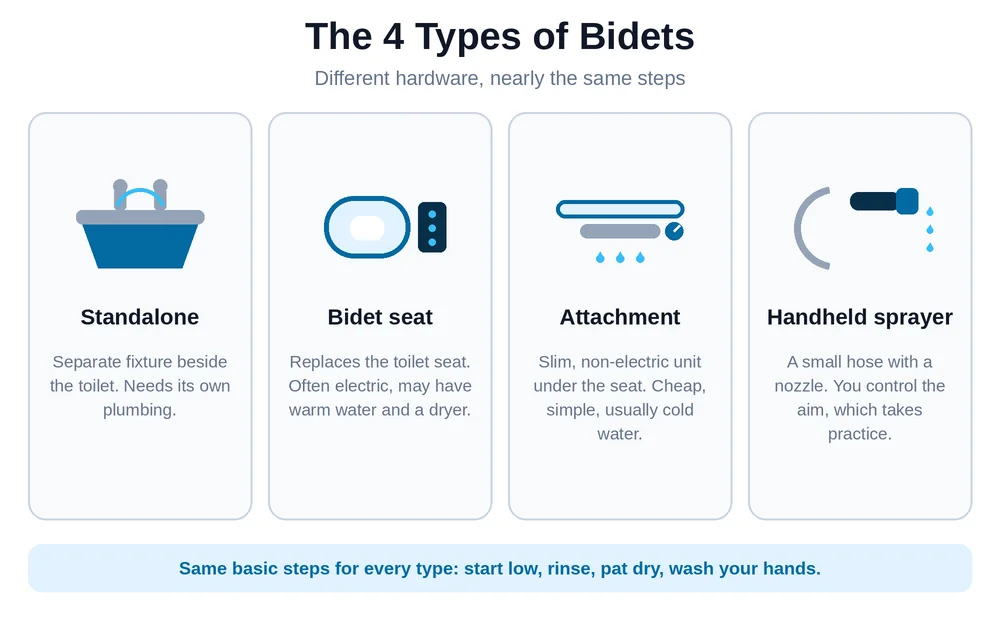
Bidets come in more forms than ever, and the type decides which buttons or valves are involved.
| Type | How it works | Good to know |
|---|---|---|
| Standalone (freestanding) | A separate fixture beside the toilet, like a low basin with taps | The traditional European style, and it needs its own plumbing |
| Bidet seat or built-in toilet | Replaces the toilet seat, with a nozzle and a control panel | Often electric, and may offer warm water and a dryer |
| Bidet attachment | A slim, non-electric unit that sits under the existing seat | Cheap, simple, and usually cold water |
| Handheld sprayer (bidet hose) | A small hose with a nozzle, mounted beside the toilet | You control the aim, which takes practice |
Some models offer warm water, either from a hot water line or from an electric seat that heats it. Nice, sure. But there’s a caution attached, and it shows up a bit further down.
How To Use a Bidet for Beginners: Step by Step
Here’s the routine that works for nearly every type.
- Use the toilet as usual.
- Wipe lightly with toilet paper (optional). Healthline suggests this for the first try. It clears the bulk, so less ends up on the nozzle.
- Check the controls before turning anything on. Find where the water comes out and how strong it is.
- Start low. Open the valve slowly, or press the lowest pressure setting.
- Aim and rinse. Point the stream at the area. A few seconds is usually enough, and under a minute is plenty.
- Move front to back if you have a vulva (more on this below).
- Turn the water off. On an attachment or sprayer, close the valve.
- Pat dry. Toilet paper, a clean towel, or an air dryer if there is one. Patting beats wiping.
- Wash your hands with soap and water.
Soap on the skin isn’t needed. Some people use a bidet like a mini shower afterward, but that’s their call.
Do You Use a Bidet Before or After Wiping?
After, for the most part. The usual order: toilet, a light wipe if wanted, bidet rinse, pat dry.
Using a bidet before a bowel movement isn’t recommended. Healthline cites a 2016 study in Japan that linked using one before going, instead of afterward, to itching around the anus. And do people skip wiping completely? Not really. After a bidet there’s far less to wipe, but a bit of paper to pat off the extra water is normal.
How To Use a Bidet as a Woman
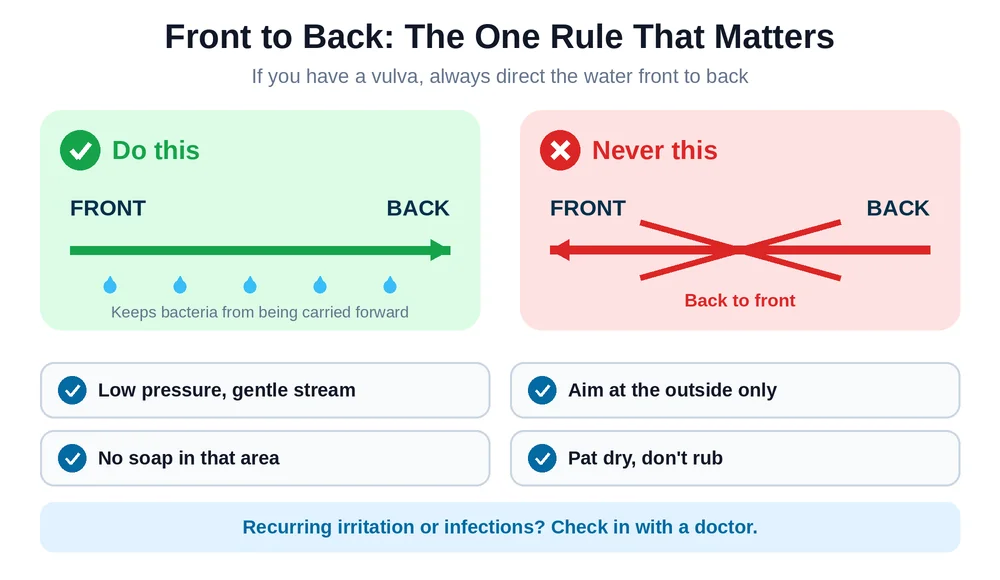
One rule matters more than the rest: front to back. Healthline and Cleveland Clinic both stress that for anyone with a vulva, water should flow front to back. That keeps bacteria from the anal area from being carried toward the vagina or urethra.
- Keep the pressure low and the stream gentle.
- Aim at the outside, never into the vagina.
- Skip soap in that area.
- Dry by patting.
One more caution. Healthline mentions a study that found habitual use of warm-water bidet toilets was linked to changes in vaginal flora. The evidence isn’t conclusive, but it’s another reason to keep pressure low and not overdo it. Anyone with recurring irritation or infections should check in with a doctor.
How To Use a Bidet as a Man
Same steps. Aim the stream at the anus, rinse until clean, then pat dry. The water can also freshen the front, gently and at low pressure.
Again, use it after a bowel movement, not before, since the itching study tied pre-use to anal itching. And keep the pressure moderate. Stronger isn’t cleaner.
How To Use a Bidet Seat or Toilet With Buttons
Electric bidet seats and built-in bidet toilets run on a control panel, usually on the side of the seat or on a remote.
- Sit fully on the seat. Many models won’t start unless a sensor detects someone sitting there.
- Press Wash (sometimes labeled Rear), and the nozzle extends.
- Adjust nozzle position, pressure and temperature in small steps until the stream feels steady and comfortable.
- Press Front for the front wash, if the model has one.
- Press Stop any time, then use Dry for warm air if wanted.
Start low on pressure and heat. A stream that feels fine for two seconds can feel intense at ten.
How To Use a Bidet Attachment
The attachment is the simplest option. A small dial or lever controls the water, and there’s no electricity involved.
- Turn the dial to start the water, gently at first.
- Rinse, then turn it off.
- Healthline’s tip for attachments: shut off the T-valve after every use. Forget it, and leaks can follow.
Most attachments run on cold water from the toilet’s supply line. Expect a jolt the first time, especially in winter.
How To Use a Handheld Bidet Sprayer (Without Making a Mess)
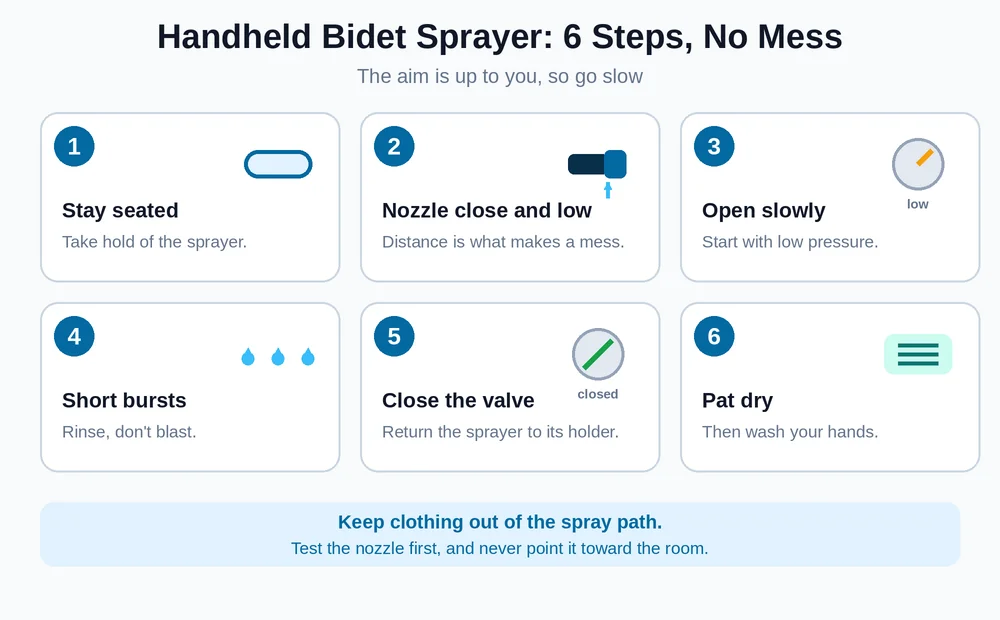
A handheld sprayer, sometimes called a bidet hose or bidet shower, is a small hose with a nozzle. Of all the types, it’s the one most likely to make a mess, since the aim is entirely up to whoever’s holding it.
- Hold the nozzle close to the body and angled low. Distance is what makes a mess.
- Open the valve slowly, starting with low pressure.
- Direct the spray where it’s needed, and adjust the pressure.
- Use short bursts rather than a constant stream.
- Close the valve, put the sprayer back in its holder, then pat dry.
Keep clothing well out of the spray path. Wet underwear and pants are the classic mishap. And don’t point the nozzle toward the room before testing it.
How To Use a Standalone Bidet (Separate From the Toilet)
A freestanding bidet sits beside the toilet, a bit like a small sink.
- Use the toilet as normal.
- Step over to the bidet.
- Turn on the water with the taps, and test the temperature on a hand first.
- Sit on or straddle the rim, whichever way makes the controls easy to reach and the rinse comfortable.
- Rinse, turn the water off, and pat dry.
- Rinse out the basin so it’s clean for the next person.
An American in Italy’s guide follows the same sequence: use the toilet, step over, turn on the faucet.
How To Use a Bidet in Italy and Europe
Travelers in Italy and much of Europe often find a freestanding bidet right next to the toilet. The routine is the one above. Mix the hot and cold taps, test the water on a hand, rinse, then clean the basin. Hotels usually leave a towel nearby, but toilet paper is the safer way to dry.
Bidet Safety and Hygiene: What Doctors Say
Doctors generally say a bidet is safe, and can be more sanitary than dry wiping, as long as it’s used correctly. Cleveland Clinic’s Dr. Lee says wiping with paper can cause chafing and tiny cuts, and that a bidet can be more comfortable for people with hemorrhoids or fissures. Healthline adds that people with hemorrhoids or irritable bowel syndrome might benefit from trying one.
There are cautions, though.
- Direction matters. Incorrect use can bring bacteria like E. coli toward the vagina or urinary tract. Front to back is the rule.
- A dirty bidet is a problem. A contaminated nozzle can pass germs to the urinary tract, the vagina or cracks in the skin. Keep it clean.
- Weakened immune systems. Healthline suggests waiting before trying one.
- Electric warm-water bidets. A 2017 study in hospitals found a general risk of bacterial contamination.
- Limited proof. There’s little strong evidence that a bidet prevents disease. The real win is comfort and cleanliness.
Medical note: this guide is general information, not medical advice. Anyone with hemorrhoids, recent surgery, a weakened immune system, or recurring irritation or infections should check with a doctor first.
Are Shared and Public Bidets Sanitary?
Less so than a bidet at home. Research on electric warm-water bidets in hospitals found a contamination risk, and shared settings are where the worry is strongest. The trouble is the nozzle. Nobody can tell how well it got cleaned.
Using one away from home? Look for a self-clean or pre-wash function, wipe the surface, keep the pressure low and wash your hands. If in doubt, plain toilet paper is the safe choice.
And do bidets spread fecal matter? Used correctly, a bidet rinses it away from the body. The risk comes from a dirty nozzle and from splashing, which is why cleaning and handwashing both matter.
Downsides of Using a Bidet
Bidets aren’t perfect. Here’s a fair look at the common downsides, and Healthline’s pros and cons of bidets goes deeper:
- A learning curve. The first few tries can be clumsy.
- Splashing. Pressure and aim make a mess when they’re off.
- Drying. Without a dryer, paper or a clean towel is still needed.
- Cold water. Many attachments run cold.
- Cost and installation. Standalone fixtures need plumbing, and heated seats cost more.
- Upkeep. Nozzles need regular cleaning.
Why Don’t Americans Use Bidets?
There’s no single reason. Habit is the big one, since most Americans grew up with toilet paper. Plenty of US bathrooms were also built without the space or plumbing for a separate fixture, and postwar construction skipped them. History plays a part, too. A commonly told story is that bidets picked up a reputation for immorality, partly from soldiers seeing them in French brothels. Things are shifting, though. Cheap attachments and seats fit the toilet that’s already there.
Keeping Your Bidet Clean
Wipe the nozzle and housing regularly with mild soap and water, and follow the manual for any self-cleaning features. And always wash your hands afterward. Clean water and clean gear matter for other health tools too, and our guide on how to use a neti pot covers similar hygiene rules for nasal rinsing.
Frequently Asked Questions
How do you use a bidet for beginners?
Use the toilet, wipe lightly if you like, then turn the bidet on at low pressure and aim the water at the area. Rinse for a few seconds, turn it off, pat dry and wash your hands. Anyone with a vulva should direct the water front to back.
Do you use a bidet before or after wiping?
After going to the bathroom. The first few times, it helps to wipe lightly with paper before rinsing. Using a bidet before a bowel movement was linked to anal itching in a 2016 study in Japan.
Is there a trick to using a bidet?
No secret, just a few habits. Start with low pressure, aim carefully, rinse in short bursts, and pat dry. With a handheld sprayer, keep the nozzle close and low to avoid a mess.
Is there a downside to using a bidet?
A few. It takes practice, it can splash, and drying off is still on you. Cold water can be a shock. Dirty nozzles and shared bidets are a hygiene risk, and improper use may disturb vaginal flora or cause itching.
Why don’t Americans use a bidet?
Mostly habit and history. Toilet paper was the norm, many bathrooms weren’t built for bidets, and the fixture had a poor reputation in the US. Affordable attachments are changing that.
Do bidets spread fecal matter?
Used correctly, a bidet rinses it away. The risk comes from a contaminated nozzle or splashing, so cleaning the bidet and washing your hands afterward both matter.
Do people not wipe after using a bidet?
Most people still pat dry with paper, a clean towel or an air dryer. There’s much less to wipe, but drying keeps the skin comfortable.
Is it sanitary to use someone else’s bidet?
It’s riskier than your own. Research on shared electric warm-water bidets, especially in hospitals, found contamination concerns. Use a self-clean function if there is one, or skip it and use toilet paper.
What do doctors say about bidets?
Generally, they’re fine when used properly, and can be gentler than dry wiping, including for hemorrhoids or fissures. Doctors stress front-to-back water flow, clean nozzles and handwashing. Evidence that bidets prevent disease is limited.
Final Thoughts
Learning how to use a bidet comes down to a few habits. Start low. Aim carefully. Rinse, then pat dry. Keep it clean. And wash your hands.
Anyone with a medical condition or recurring symptoms should check in with a doctor, since this guide is general information and not medical advice. For another device that’s worth learning to use correctly, see our guide on how to use an inhaler.
Sources consulted: Cleveland Clinic (Is Using a Bidet Healthy?), Healthline (How to Use a Bidet Properly, medically reviewed) and An American in Italy. All content was written independently in original wording.