

How to use an Instant Pot in a nutshell: start with a water test. Then put the food and some thin liquid (at least 1 cup in a 6-quart pot, most of the time) into the stainless steel inner pot, lock the lid, and turn the steam release valve to Sealing. Pick Pressure Cook, set the time, and let it work. When the timer beeps, release the pressure naturally or with Quick Release, then open the lid.
Lots of Instant Pots never make it out of the cupboard. Somebody unboxes one, twists the lid, hears a click, sees the screen say “On,” and quietly gives up. Fair, honestly. Nothing explains the buttons, the valve looks like it could launch the lid, and nobody wants a steam burn on night one. But the scary part is just steam, and steam is easy to handle once the basics make sense. So that’s where this guide starts: what the pot does, the parts that matter, the water test, one full cook, how long it really takes, and what to do when it acts up.
Quick Takeaways
- Do the water test before the first real meal.
- Thin liquid isn’t optional. No liquid, no pressure.
- The steam release valve sits on Sealing while cooking.
- Natural release is gentle. Quick Release is fast and hot.
- The timer starts after the pot reaches pressure, so dinner takes longer than the screen says.
What Is an Instant Pot and What Can It Do?
It’s an electric multi-cooker. The big trick is pressure cooking. Steam gets trapped in a sealed pot, and food cooks far faster than it would on the stove or in the oven. Tough meat goes tender. Dried beans soften without an overnight soak. Rice and soup mostly take care of themselves.
The Instant Pot Duo, the most common model, is a 7-in-1. That answers the “7 functions” question:
- Pressure cooker
- Slow cooker
- Rice cooker
- Steamer
- Sauté pan
- Yogurt maker
- Food warmer
Most owners don’t touch all seven. Pressure cooking gets the most use, then sauté, then rice. The yogurt button can wait.
Which Instant Pot Model Do You Have?
Check the model number on the bottom of the unit. Buttons differ by model, and so do manuals. Instant Pot manuals are posted online, so finding the right one takes a minute.
| Model | What it is | Good to know |
| Duo | The classic 7-in-1 | High and low pressure settings, yogurt function |
| Rio | A 7-in-1 in the Duo family | 13 smart programs, similar controls to the Duo |
| IP-LUX | An older, simpler model | High pressure only, and no yogurt function |
| Duo Crisp | Pressure cooker plus air fryer | Comes with a second, air fryer lid |
Seeing a button on a friend’s pot that yours lacks? That’s the model. The core steps below work for the Duo, IP-LUX and Rio alike. Only a few program buttons change.
Know Your Instant Pot: The Key Parts
Five parts matter.
| Part | What it does |
| Inner pot | The removable stainless steel pot that holds the food |
| Lid | Locks onto the base with a twist |
| Sealing ring | A silicone ring under the lid that traps pressure |
| Steam release valve | Switches between Sealing and Venting |
| Float valve | A small pin that pops up once the pot is pressurized |
The sealing ring deserves attention. It should sit snug in its rack. If it’s stretched, cracked or crusty, the pot won’t seal. Wash it after every use. Replace it when it looks worn.

How To Use an Instant Pot Step by Step (Beginners)
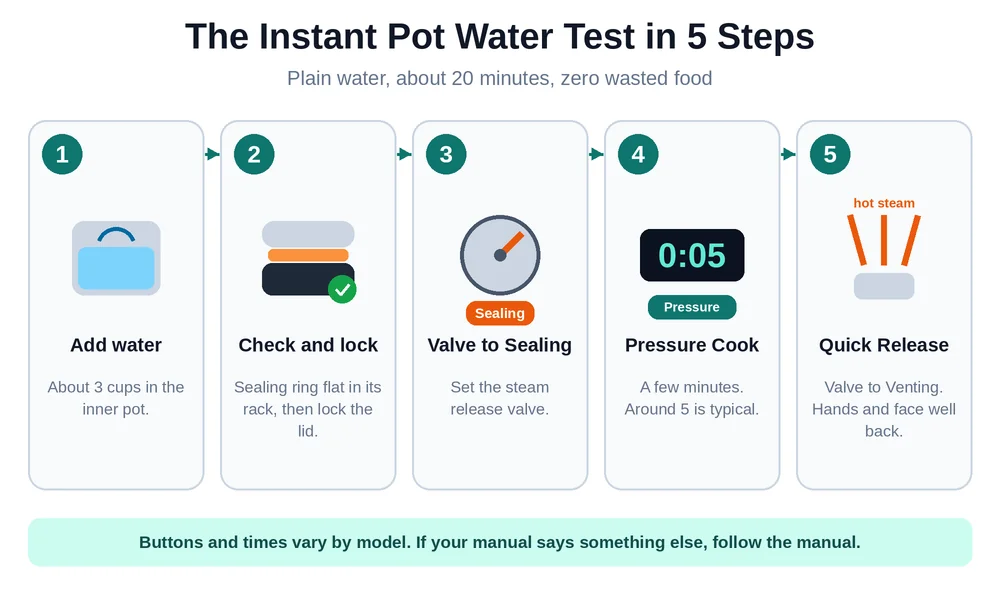
First, the Water Test
Seriously, don’t skip it. Otherwise the first real dinner is the test, and finding out mid-recipe that the lid doesn’t seal is a miserable way to learn. All the water test does is cook plain water under pressure. But it shows whether the seal works, and it lets you watch steam release when nothing’s at stake. About 20 minutes, start to finish. Instant Pot Eats has a handy walkthrough of the water test too.
- Add about 3 cups of water to the inner pot.
- Look at the sealing ring. Sitting flat in its rack? Good. Lock the lid.
- Valve to Sealing.
- Press Pressure Cook (a few guides say Steam, so check your manual) and set a few minutes. Around 5 is typical.
- When it beeps, nudge the valve to Venting for a Quick Release. A long spoon works best. Keep your hands and face well back, because that steam is hot and it comes out fast.
Every model is a bit different, so buttons and times may not match exactly. If the manual says something else, believe the manual.
Then, a Real Cook
- Check the pot and ring. Inner pot in. Ring snug.
- Sauté first, if the recipe wants it. Brown the meat or soften the onions with the Sauté button. Add a splash of liquid afterward and scrape the bottom, so nothing sticks.
- Add thin liquid and food. Water, broth, juice or a thin sauce. Most 6-quart recipes call for at least 1 cup, and smaller pots can use less. Don’t overfill. Many guides say stop at two-thirds full, or half full for foods that expand or foam, like rice and beans.
- Lock the lid. Twist until it clicks. Set the valve to Sealing.
- Pick a program. Pressure Cook (Manual on some models), High pressure unless the recipe says otherwise, then set the time.
- Wait while it heats. The display may say “On” while pressure builds. That’s roughly 5 to 20 minutes, depending on what’s inside. The countdown begins once pressure is reached.
- Release the pressure. Natural or Quick Release, whichever the recipe wants.
- Open the lid away from your face. Stir, add dairy or thickeners now, and serve. Leave it alone and it slides into Keep Warm.
Quick Release vs Natural Release
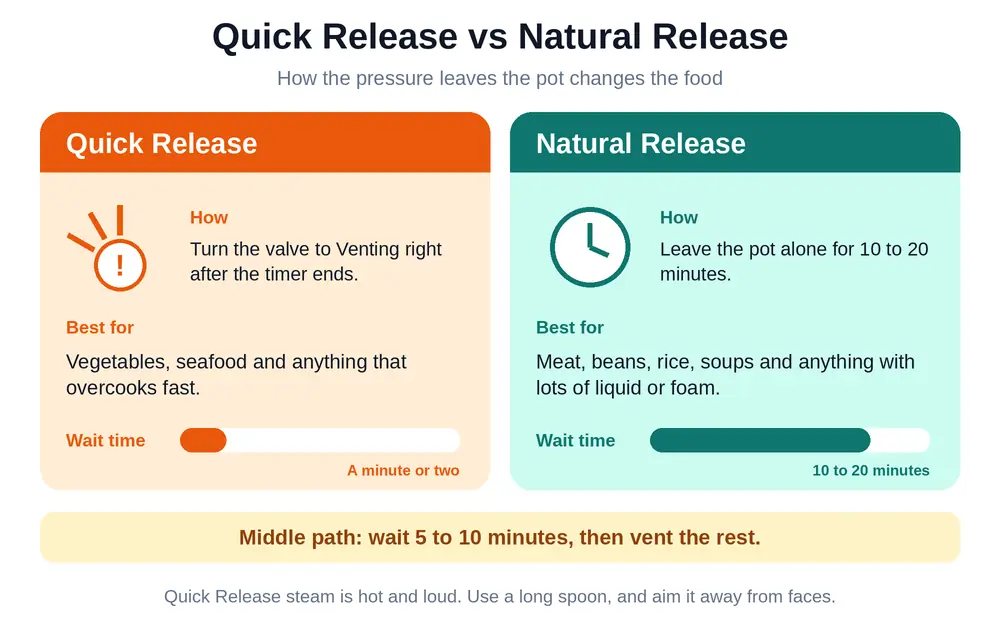
The way pressure leaves the pot matters as much as the cook time.
| Method | How it works | Best for |
| Quick Release | Turn the valve to Venting right after the timer ends | Vegetables, seafood and anything that overcooks fast |
| Natural Release | Leave the pot alone for 10 to 20 minutes | Meat, beans, rice, soups and anything with lots of liquid or foam |
There’s a middle path, and recipes use it a lot. Wait 5 or 10 minutes, then flip the valve and vent whatever’s left. Gentler than Quick Release, quicker than a full wait.
Quick Release steam is hot and loud. Use a long spoon on the valve, and aim it away from cabinets, people and faces. The Feathered Nester explains when to use each release method if a recipe doesn’t say.
How Long Does an Instant Pot Take to Cook?
Longer than the timer. Three things stack up:
- Coming to pressure: roughly 5 to 20 minutes, depending on the amount and temperature of the food.
- Cooking time: whatever number was set.
- Pressure release: a minute or two for Quick Release, or 10 to 20 minutes for natural release.
A recipe with a 5-minute cook time can easily run 25 to 45 minutes start to finish. Still quicker than most oven or stovetop versions, especially for tough meat and beans.
Typical Cook Times (Starting Points)
| Food | Typical high-pressure time | Release |
| White rice | About 3 to 4 minutes | Natural, about 10 minutes |
| Brown rice | About 22 minutes | Natural, about 10 minutes |
| Quinoa | About 1 minute | Natural, about 10 minutes |
| Green lentils | About 6 to 8 minutes | Natural |
Starting points only. Brands, pot sizes and recipes vary, so a tested recipe or a cook-time chart for the exact food is safer.
How To Use an Instant Pot for Rice
Rice is the classic first test. It’s also where plenty of beginners get burned, or at least gummy.
- Rinse it. Skipping the rinse is the quickest route to sticky, gluey rice.
- Water ratio: for white rice, roughly equal parts rice and water. A splash more, if softer grains are the goal.
- Cook it on high pressure for about 3 to 4 minutes, then leave it alone for a natural release of about 10. Fluff with a fork.
- Brown rice? Different animals. Closer to 22 minutes.
Some pots have a Rice button, which is basically pressure cooking with preset timing. Others, like the Duo Crisp, don’t, and Pressure Cook handles it fine. Brands differ a bit on timing, so glance at the rice package and the manual before trusting any number, this one included.
Cooking rice most nights? A dedicated rice cooker is simpler, and our guide on how to use a rice cooker covers it.
How To Use an Instant Pot Pressure Cooker for Meat
Meat is where the pot really earns its spot on the counter. Cheap, tough cuts, like chuck roast, pork shoulder and stew meat, come out amazing under pressure. The heat and steam break down the connective tissue, and what was chewy turns tender.
- Brown it first with the Sauté button. More flavor, and no extra pan to wash.
- Don’t forget the liquid. The pot needs thin liquid to seal at all.
- Cook time depends on how thick and big the cut is, not only the weight. Frozen takes longer.
- Natural release usually keeps meat juicier. Quick Release can make it tougher.
Boneless chicken breasts are a different story. They cook fast, and they dry out even faster, so stick to a tested recipe or a time chart there.
How To Use an Instant Pot Air Fryer (Duo Crisp)
Some models, like the Duo Crisp, ship with two lids. The pressure lid seals and locks. The air fryer lid doesn’t pressurize, and it adds air frying, roasting, baking and dehydrating. New to air frying? Our guide on how to use an air fryer covers the basics.
Use each lid for its own job. Pressure cook with one, crisp with the other. A common trick is to pressure cook first, then switch lids to brown the top. The air fryer lid has electronics inside, so Instant Pot’s advice is to wipe it with a dry, soft cloth instead of washing it.
What Foods Should Not Be Cooked in an Instant Pot?
A pressure cooker is a sealed, steamy box. Some foods just don’t belong in it.
- Fried or breaded foods. The coating turns soggy. Use an air fryer or oven.
- Dairy-heavy dishes. Milk, cream and cheese can curdle under pressure. Stir them in afterward.
- Pasta and noodles. They foam and come out gummy or uneven. Boil them on the stove.
- Delicate seafood. Fish and shrimp cook so fast that they overcook easily.
- Thickeners before cooking. Flour and cornstarch can clump or scorch. Add them later.
- Anything that needs to crisp or bake. Bread, cookies and dishes that need dry heat.
- Foamy foods. Oats, applesauce and some beans can foam and clog the valve, so they need extra care and a lower fill line.
Some people cook pasta and oatmeal in an Instant Pot, using tested recipes. Those recipes just work around the quirks. For a longer list, Tom’s Guide rounds up ten foods to skip.
Instant Pot Safety Tips
- Keep face and hands away from the steam release valve.
- Use a long spoon or tool to turn the valve.
- Never force the lid open. If it won’t turn, pressure is still inside.
- Don’t overfill the inner pot.
- Always use enough liquid.
- Set the pot on a stable, heat-safe surface, away from the counter’s edge.
- Check the sealing ring and valve for damage or blockages before cooking.
Instant Pot Burn Notice and Common Problems
| Problem | Likely cause | Fix |
| “Burn” message | Food stuck on the bottom, not enough thin liquid, or thickener added early | Add more liquid, scrape the bottom after sautéing, and add thickeners after cooking |
| Won’t come to pressure | Valve not on Sealing, ring missing or loose, lid not locked, too little liquid | Check each one and restart |
| Steam leaking from the sides | Ring not seated or dirty, lid not locked | Reseat the ring and clean the rim |
| Lid won’t open | Pressure still inside | Release pressure fully, then try again |
If the pot keeps acting up, check the steam release valve for blockages. Instant Pot Eats has a full guide on fixing a pot that won’t seal, and a worn sealing ring may need replacing.
Frequently Asked Questions
How do you use the Instant Pot step by step?
Water test first. Then food and thin liquid go into the inner pot, the lid locks, the valve goes to Sealing, and Pressure Cook gets a time. When it beeps, let the pressure out naturally or with Quick Release, and open the lid.
What foods should not be cooked in an Instant Pot?
Fried and breaded foods, dairy-heavy dishes, pasta, delicate seafood, and anything needing thickener before cooking. Foamy foods like oatmeal and applesauce need extra care. Dairy and thickeners go in after pressure cooking.
How easy is an Instant Pot to use?
Easy, after the first two or three cooks. The buttons look confusing, but the steps never change: liquid, seal, pressure cook, release. The water test is the best way to get comfortable.
What’s the first thing I should cook in my Instant Pot?
Something simple, right after the water test. Plain white rice is a popular starter, and so are hard-boiled eggs or a basic soup. They teach sealing, timing and release without much risk.
Is an Instant Pot Unhealthy?
Not really. The pot is just a way of cooking, and it doesn’t make food good or bad on its own. What goes inside does that. Pressure cooking needs very little oil, which helps, but a pot of chili and a pot of cream-heavy pasta are still two very different dinners.
What is the most popular Instant Pot recipe?
Nobody keeps an official ranking, so it’s hard to crown one. Chicken and rice, pulled pork, chili, soup, hard-boiled eggs and plain rice come up the most. All of them use liquid and hold up under pressure, which is exactly what the pot likes.
Is an Instant Pot worth buying?
For plenty of people, yes. Beans, tough cuts of meat, rice and soup are where it shines. If counter space is tight, though, or a slow cooker and rice cooker already do the same jobs, it might just be one more gadget. The learning curve is short, and a model like the Duo covers most needs.
What are the 7 functions of an Instant Pot?
On the Duo, it’s pressure cooker, slow cooker, rice cooker, steamer, sauté pan, yogurt maker and food warmer. Some other models add more, like air frying on the Duo Crisp.
How long does an Instant Pot take to cook?
Longer than the timer says. The pot needs roughly 5 to 20 minutes to build pressure before the countdown even starts. Then comes the cooking time you set, then a few minutes to let the pressure out (Quick Release) or 10 to 20 minutes (natural release). Plenty of meals end up taking 25 to 45 minutes in all.
Final Thoughts
Learning how to use an Instant Pot comes down to a few habits. Do the water test. Add enough thin liquid. Keep the valve on Sealing. Pick the right release. And stay clear of the steam.
Models, buttons and cook times differ, so the manual for your own Instant Pot and Instant Pot’s official guidance are the best sources for exact steps on your pot.
For more free step-by-step kitchen and tech guides like this one, visit The How To Use.
Sources consulted: Instant Pot manuals and help pages, The Feathered Nester, Instant Pot Eats, A Mind Full Mom, Tom’s Guide, CNET and TechRadar. All content was written independently in original wording.

